


Detector IA: A Practical Look at Checking AI-Written Content
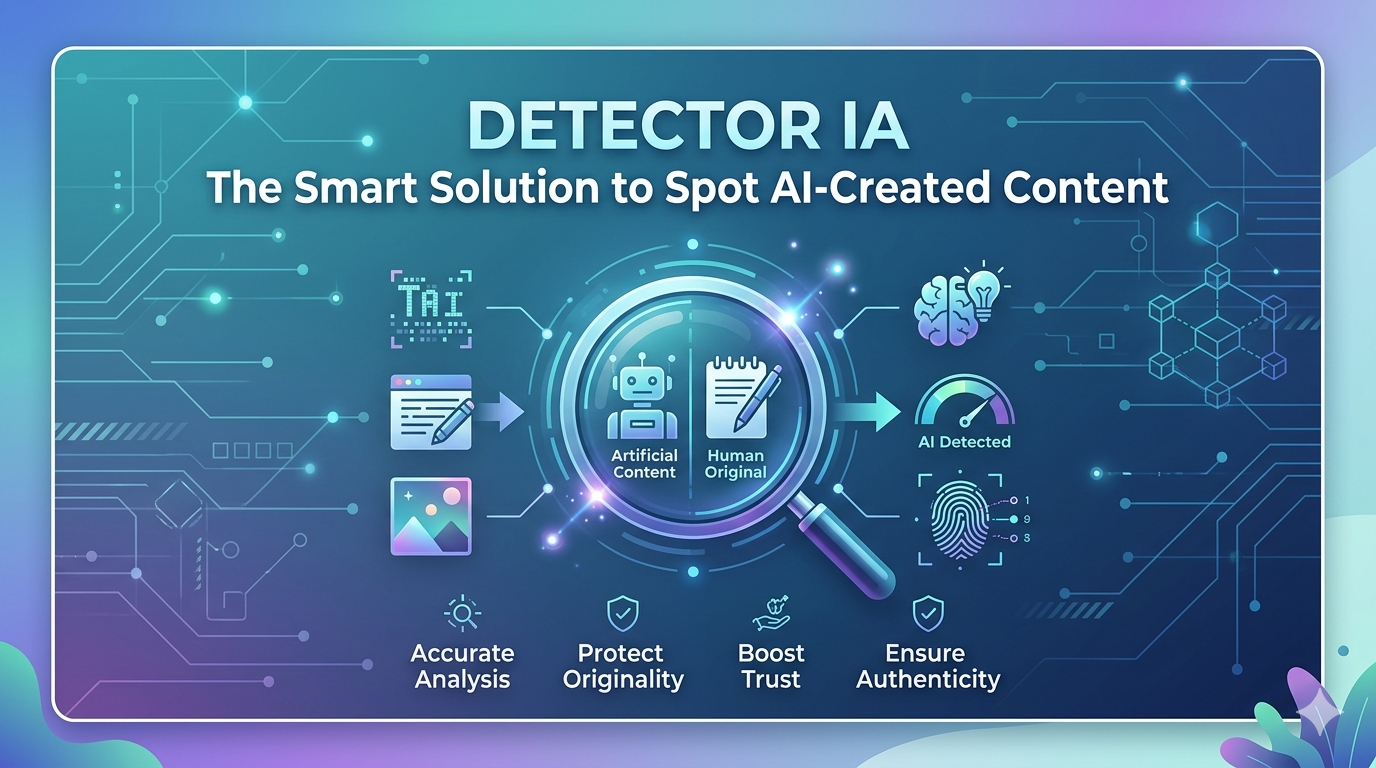
Last year, checking whether something was written by AI felt like a niche task. Now it has become part of everyday content work. A teacher reads an assignment and wonders how it was produced. An editor receives an article that sounds unusually polished. A business owner gets a blog from a freelancer and wants to know whether the writer actually created it.
That is where a Detector IA can come into the picture.
AI detection software is built to examine writing and look for patterns that may suggest the use of an artificial intelligence writing tool. It does not read a document the way a person does. Instead, it studies the language and tries to spot characteristics that appear frequently in machine-produced text.
Why People Are Checking Content Differently Now
Writing has changed.
Someone can sit down with a blank document, enter a short instruction, and receive a complete article almost instantly. That can be useful when a person needs help organizing ideas or getting past a blank page. But it also makes authorship harder to judge from the finished text alone.
Imagine receiving two articles about the same subject. Both are grammatically correct. Both contain useful information. Yet one feels like someone actually sat down and thought through the subject, while the other sounds smooth but strangely uniform.
That difference is one reason AI checking tools have attracted attention.
What Happens When Text Goes Through an AI Checker?
When text is submitted to an AI detection service, the system examines different features of the writing. It may look at how predictable the wording is, how sentences are constructed, how vocabulary changes throughout the article, and whether paragraphs follow repetitive patterns.
Human writing is rarely perfectly even.
A person might write one sentence in five words and then spend forty words explaining the next idea. They may use an unusual expression, change their tone halfway through a paragraph, or explain something in a way that reflects their own experience.
Machine-generated writing can sometimes be more consistent. The sentences may have a similar rhythm, transitions can appear in familiar places, and certain phrases may return more often than expected.
A detection system looks for signals like these and uses them to produce an assessment.
A Score Is Not the Same as Proof
This is an important part of the conversation.
An AI detector should not be treated like a fingerprint scanner. A result suggesting that text may have been generated by AI does not automatically establish who wrote it or how it was produced.
There are plenty of reasons this matters. Someone who writes in a formal academic style may naturally produce predictable sentences. A non-native English writer may use straightforward sentence patterns repeatedly. An experienced editor may also clean up unusual wording and make a document more consistent.
On the other side, AI-generated material can be heavily edited by a person until it looks considerably different from the original output.
So, a detection result is better viewed as a clue than a final verdict.
Where a Detector IA Can Be Useful
The usefulness of an AI checker depends heavily on how it is used.
For publishers, it can provide another checkpoint before an article goes live. Content managers can use it when reviewing material submitted by multiple writers. Teachers may use detection results as one part of a wider conversation about how an assignment was produced.
Writers can also use these tools on their own work.
For example, a freelancer might write an article, edit it several times, and then run it through a detector simply to see whether the writing contains patterns that could be mistaken for machine-generated text. The result can encourage the writer to add clearer explanations, personal observations, stronger examples, or more natural sentence variation.
That makes the tool useful as a writing-review aid rather than simply a policing system.
Good Writing Still Matters More Than a Score
There is a temptation to chase a perfect detection result. That can lead writers in the wrong direction.
Changing sentences just to satisfy an automated checker can make an article awkward. Adding random mistakes, unusual words, or unnecessary complexity does not automatically make content better or more human.
A stronger approach is to focus on the actual quality of the writing.
Does it answer the reader's question? Does it explain the subject clearly? Are the facts accurate? Does the article contain useful examples? Does the writer sound like a real person rather than repeating the same polished phrases found everywhere else?
Those questions matter regardless of what a detection tool reports.
The Role of AI Detection in Modern Writing
AI is unlikely to disappear from the writing process. People will continue using it for brainstorming, research assistance, editing, and many other tasks. At the same time, readers will continue to care about originality and genuine expertise.
An AI detection checker can help identify writing patterns that deserve a closer look, but it cannot understand every detail behind a document. The strongest content checks combine technology with human review.
In the end, good writing is not about trying to fool a detector. It is about giving the reader something useful, clear, specific, and worth reading — something that feels considered rather than automatically assembled.

 Arabic
 French
 Spanish
 Portuguese
 Deutsch
 Turkish
 Dutch
Dutch
 Italiano
 Russian
 Romaian
 Portuguese (Brazil)
 Greek
Greek