


China Industrial Pump Demand Rising with Water Treatment and Industrial Water Reuse
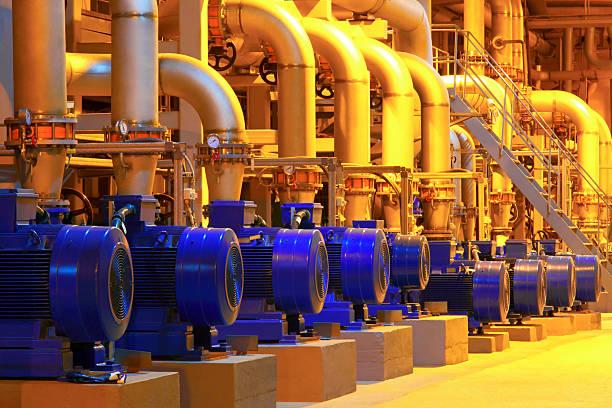
China’s expanding industrial base is creating sustained demand for reliable water-treatment infrastructure across manufacturing facilities, industrial parks, utilities, and process-intensive industries. As industries place greater emphasis on water efficiency, wastewater treatment, recycling, and regulatory compliance, pumping systems are becoming an essential part of water intake, transfer, circulation, and treatment processes. The growing focus on resource conservation is also encouraging industries to modernize equipment and adopt more efficient solutions for managing industrial water.
A comprehensive assessment by Markntel Advisor reveals that the China Industrial Pumps for Water Treatment Market is valued at USD 2.75 Billion in 2026 and is projected to reach USD 4.20 Billion by 2032, registering a CAGR of 7.31% during 2026-2032. The chemicals and petrochemicals segment leads by end-user industry, reflecting the significant water-management requirements of these process-intensive sectors. Detailed insights are available in the China Industrial Pumps for Water Treatment report, which covers product types, treatment applications, and industry developments.
Industrial Water Management Supporting Equipment Demand
Water-intensive industries require dependable pumping systems throughout the treatment cycle, from initial water intake and transfer to process circulation and core treatment applications. Industrial pumps help maintain the movement and pressure required for filtration, chemical treatment, wastewater processing, and water-reuse systems.
China’s regulatory framework also places significant emphasis on controlling industrial water pollution. The country's Water Pollution Prevention and Control Law requires industrial wastewater-generating enterprises to implement effective collection and treatment measures, while also encouraging improvements in water reuse and reductions in wastewater discharge. These requirements create a supportive environment for investment in treatment infrastructure and associated pumping equipment.
Chemicals and Petrochemicals Creating Strong Demand
The chemicals and petrochemicals segment leads by end-user industry, reflecting the complex water requirements associated with chemical processing, refining, cooling, cleaning, and wastewater management. These facilities often handle fluids under demanding operating conditions, increasing the importance of pumps capable of providing consistent flow, pressure, and reliability.
Industrial operators are also increasingly focused on optimizing water consumption and improving wastewater recovery. The need for efficient circulation and treatment across multiple process stages can encourage the adoption of advanced pumping technologies designed for continuous and demanding industrial operations.
Centrifugal Pumps Supporting Diverse Applications
The report covers centrifugal pumps, positive displacement pumps, and other pump types, reflecting the diverse operating requirements across industrial water-treatment applications. Centrifugal pumps can support high-flow water movement and circulation requirements, while positive displacement technologies can be suited to applications requiring controlled fluid movement and consistent flow under specific operating conditions.
Selection increasingly depends on factors such as fluid characteristics, flow requirements, pressure, temperature, chemical compatibility, operating environment, and maintenance needs. Consequently, manufacturers are focusing on improving hydraulic efficiency, reliability, monitoring capabilities, and equipment durability.
Industrial Water Reuse Strengthening Long-Term Opportunities
Water conservation is becoming an increasingly important consideration for Chinese industries. The Ministry of Industry and Information Technology has been promoting advanced industrial water-saving technologies and equipment, while encouraging industrial wastewater recycling and more efficient water use. Its 2025 industrial water-saving initiative specifically covers sectors such as steel, petrochemicals and chemicals, textiles, food processing, pharmaceuticals, construction materials, coal, and power.
These initiatives can create opportunities for industrial pump suppliers because water-reuse systems require reliable movement of treated and process water between different treatment and production stages. Greater emphasis on closed-loop and cascading water use can further increase the need for efficient circulation equipment.
Treatment Infrastructure Becoming More Sophisticated
China is also strengthening technical frameworks around industrial wastewater treatment. In 2026, the Ministry of Ecology and Environment announced a national technical guideline for developing pollutant discharge standards for centralized wastewater treatment facilities in industrial parks, with implementation beginning in September 2026. The new environmental standard provides a framework for standard-setting associated with industrial-park wastewater treatment.
Such developments can encourage industrial facilities and treatment operators to improve infrastructure reliability and monitoring. Pumping systems form an important part of this infrastructure because treatment processes depend on stable fluid transfer between collection, processing, storage, and discharge or reuse stages.
Efficiency and Smart Operation Gaining Importance
Energy efficiency is becoming increasingly relevant to industrial pumping because pumps can operate continuously and account for significant electricity consumption within water-treatment systems. Manufacturers are therefore emphasizing improved hydraulic performance, variable-speed operation, intelligent monitoring, predictive maintenance, and equipment optimization.
Digital monitoring can also help operators identify abnormal operating conditions, reduce downtime, and schedule maintenance more effectively. As industrial facilities pursue greater automation and resource efficiency, the integration of pumps with broader control and monitoring systems is expected to become increasingly important.
Outlook Through 2032
China’s industrial pumps for water treatment industry is positioned for steady expansion as industrial water demand, wastewater treatment requirements, water reuse initiatives, and environmental standards continue to evolve. The projected increase from USD 2.75 Billion in 2026 to USD 4.20 Billion by 2032 highlights opportunities across product types and treatment applications. With chemicals and petrochemicals maintaining the leading end-user position, continued investment in efficient water management, treatment infrastructure, and industrial wastewater recycling is expected to support industry development through 2032.

 English
 Arabic
 French
 Spanish
 Portuguese
 Deutsch
 Turkish
 Dutch
Dutch
 Russian
 Romaian
 Portuguese (Brazil)
 Greek
Greek