


How Can Developers Use Real Estate Tokenization to Structure Debt-Free Property Funding?
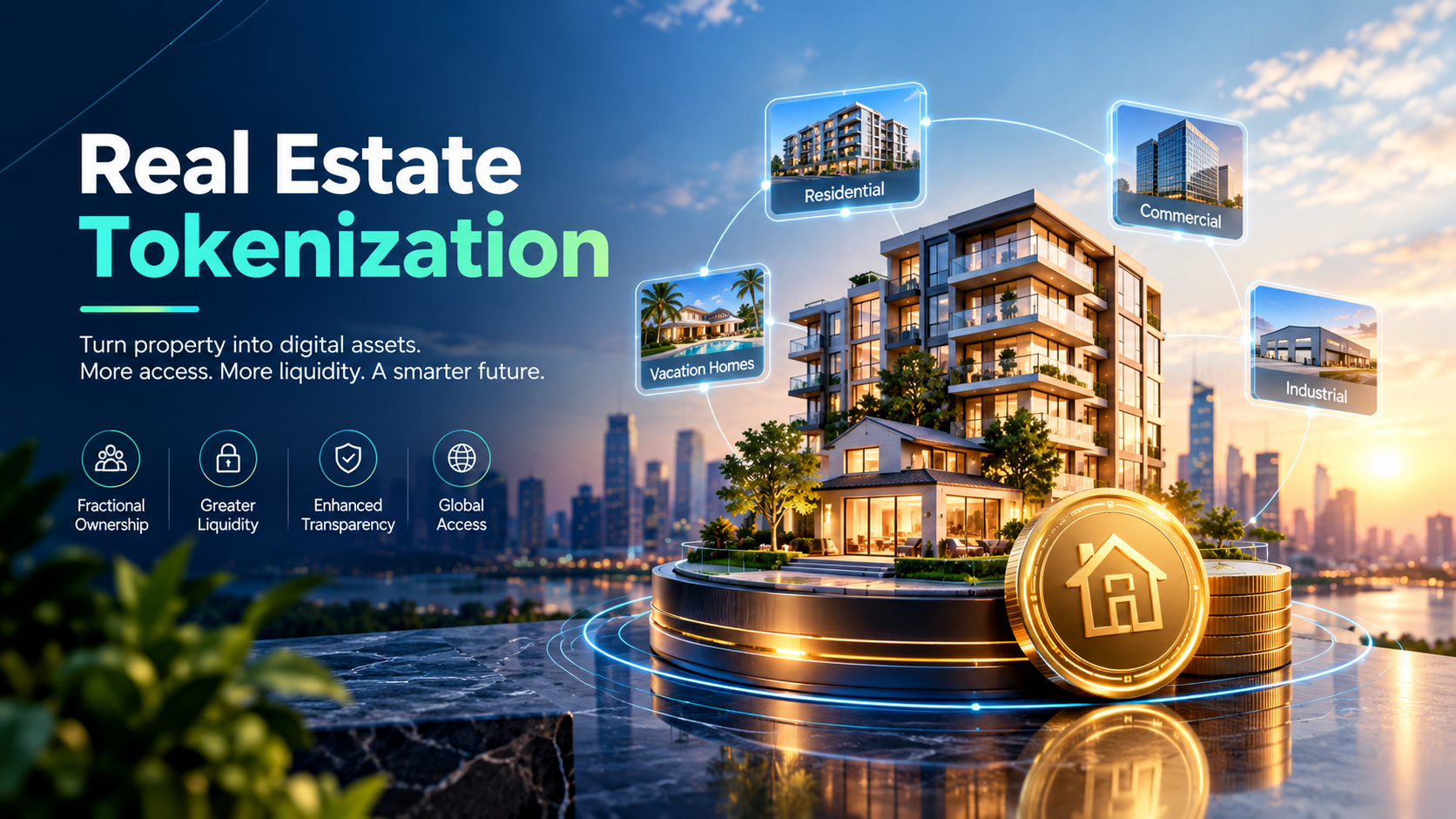
Real estate developers often rely on bank loans, mortgages, and other forms of debt to finance property acquisition and construction. Although these funding methods can support project growth, they may also create repayment obligations, interest expenses, and financial pressure. Real estate tokenization offers an alternative approach by allowing developers to represent eligible property ownership interests or contractual rights as digital tokens and offer them to investors.
Through real estate tokenization, developers can structure property funding around equity participation, shared ownership, and predefined economic rights instead of relying entirely on traditional borrowing. This approach can help developers raise capital while reducing their dependence on debt, provided the funding structure aligns with applicable regulations and investor agreements.
What Is Debt-Free Property Funding in Real Estate Tokenization?
Debt-free property funding refers to raising capital for a real estate project without taking on conventional loans or creating new debt obligations for the project. Instead of borrowing money and repaying it with interest, developers can raise funds by offering investors an ownership stake or specific contractual economic rights.
Real estate tokenization supports this model by digitally representing eligible interests in a property, a property-holding entity, or a project-specific investment structure.
For example, a developer planning to construct a commercial property may establish a special-purpose vehicle (SPV) to hold the asset. The SPV can issue equity interests represented by tokens to eligible investors. The funds raised can support land acquisition, construction, or other approved project expenses.
In this arrangement, investors may receive distributions from rental income, participate in capital appreciation, or benefit from proceeds generated when the property is sold. These returns depend on the investment terms and are not guaranteed.
Unlike debt financing, equity-based funding generally does not require scheduled principal repayments. However, developers must consider ownership dilution, investor rights, profit-sharing arrangements, and compliance obligations.
How Real Estate Tokenization Helps Developers Raise Debt-Free Capital
1. Raising Equity Capital From Multiple Investors
Tokenization allows developers to structure investment opportunities for multiple eligible investors rather than depending on a single lender or funding institution.
A developer can divide an eligible investment offering into digital units representing interests in an SPV or another legally defined investment arrangement. Investors can contribute different amounts according to the offering terms, enabling the project to attract capital from a broader investor base.
For example, a developer seeking $5 million for a residential project could raise the required amount through equity contributions from several investors. Instead of making loan repayments, the project would distribute profits according to the agreed investment structure.
The developer must clearly define voting rights, ownership percentages, distributions, and investor protections before issuing tokens.
2. Funding Construction Without Traditional Loans
Construction projects frequently require significant upfront capital for land preparation, materials, labor, permits, and infrastructure. Bank financing can help cover these costs but may introduce interest payments, collateral requirements, and repayment schedules.
A tokenized funding model can enable developers to raise equity before construction begins or during specific project stages.
Investors may contribute capital in exchange for ownership interests or contractual rights linked to the project. The funds can then be allocated to approved development expenses according to the offering documents.
This model can reduce the need for conventional borrowing. However, developers still need sufficient capital to manage cost overruns, delays, and unexpected expenses.
3. Tokenizing Property Ownership Through an SPV
An SPV can provide a legal structure for holding a property and organizing investor participation. Instead of transferring direct legal title to individual token holders, the SPV may issue equity interests that are represented digitally.
For instance, a commercial property could be held by an SPV that raises capital from investors through a tokenized equity offering. The developer manages the project, while investors hold rights defined by the SPV's governing documents.
This structure can help separate project finances from the developer's other business activities, depending on the legal arrangement and applicable jurisdiction.
Importantly, a token does not automatically establish legal ownership of real estate. The underlying rights must be enforceable under the relevant laws and reflected in appropriate legal documentation.
4. Using Rental Income to Support Investor Returns
Income-generating properties can provide a funding structure based on operational cash flows rather than borrowing.
Developers may tokenize eligible interests in completed apartments, office buildings, retail spaces, or industrial properties. Investors participate in the investment according to the agreed terms, and rental income may be distributed after operating expenses, taxes, reserves, and other applicable costs.
For example, a developer could raise equity to acquire a leased commercial building. Rental income generated by the building could support periodic distributions to investors, depending on occupancy, expenses, and the property's financial performance.
This approach can align investor returns with the property's performance without creating conventional loan repayments. Nevertheless, rental income can fluctuate, and distributions are not guaranteed.
Key Real Estate Tokenization Models for Debt-Free Funding
|
Tokenization model |
How it supports funding |
|---|---|
|
Equity tokenization |
Raises capital by offering investors ownership interests in a property-holding entity. |
|
SPV-based tokenization |
Organizes project ownership and investor participation through a dedicated legal entity. |
|
Rental income tokenization |
Structures investor rights around eligible rental income or related economic interests. |
|
Development project tokenization |
Raises equity capital for land acquisition, construction, or redevelopment. |
|
Property portfolio tokenization |
Pools eligible property investments into a portfolio-based structure to attract capital. |
The most suitable model depends on the property's legal structure, the developer's funding objectives, investor eligibility, and applicable securities and property laws.
Steps to Structure Debt-Free Property Funding Through Tokenization
Step 1: Identify the Property and Funding Requirements
Developers should begin by identifying the property or project they want to finance. This may include a new residential development, commercial building, industrial facility, or income-generating property.
They should estimate land costs, construction expenses, professional fees, contingency reserves, and expected operating costs. A clear funding target helps determine how much equity must be raised and what investor participation may be appropriate.
Step 2: Establish the Legal and Ownership Structure
The next step is to determine how the property will be owned and how investors will participate. Developers may use an SPV or another suitable legal entity to hold the property and issue investment interests.
Legal advisors should define the relationship between the property, the issuing entity, the developer, and token holders. They should also establish investor rights, transfer restrictions, governance arrangements, and distribution policies.
Step 3: Define the Investment Offering
Developers need to explain what investors receive in exchange for their contributions.
The offering should specify the total capital sought, minimum investment requirements, ownership percentages or economic rights, anticipated holding period, fees, distribution mechanisms, and exit conditions.
Clear documentation helps investors understand the investment structure and the risks involved.
Step 4: Develop the Real Estate Tokenization Platform
A real estate tokenization platform provides the digital infrastructure for issuing tokens and managing investor participation.
Key features may include:
-
Investor onboarding: Identity verification, eligibility checks, and required compliance procedures.
-
Token issuance: Digital representation of legally defined ownership interests or contractual rights.
-
Smart contracts: Automated handling of approved issuance, transfer, and distribution rules.
-
Payment integration: Support for permitted funding methods and transaction records.
-
Investor dashboard: Access to investment documents, ownership records, financial reports, and project updates.
The platform should reflect the underlying legal arrangements rather than treating token issuance as a substitute for them.
Step 5: Raise Capital From Eligible Investors
Once the structure and platform are ready, the developer can market the offering to eligible investors through permitted channels.
Investors review the project information, financial assumptions, risk disclosures, and legal documents before participating. The platform can record subscriptions and issue tokens after the required checks and payment conditions are satisfied.
Developers should not assume that tokenization automatically enables unrestricted global fundraising. Securities regulations, investor eligibility rules, and marketing restrictions may apply.
Step 6: Manage Funds and Distribute Returns
After fundraising, the developer uses the capital according to the approved project budget. Transparent accounting and periodic reporting help investors understand how funds are allocated and how the project progresses.
Where applicable, smart contracts can automate distribution calculations or payments based on verified financial data and predefined rules. Human oversight, reconciliation, and dispute-handling procedures remain important.
Step 7: Plan Investor Exit Options
Developers should establish an exit strategy before launching the offering. Potential options include selling the completed property, refinancing through a separately evaluated financing arrangement, buying back interests where legally and financially feasible, or permitting eligible secondary transfers.
Tokenization may simplify the administration of transfers, but it does not guarantee liquidity or an available buyer. Any exit must comply with the investment documents and applicable law.
Benefits of Debt-Free Property Funding Through Tokenization
Reduced reliance on borrowing: Equity fundraising can reduce the need for conventional loans and their associated interest and repayment obligations.
Flexible capital formation: Developers can structure offerings around different project sizes, asset types, and investor participation requirements.
Potential access to a wider investor base: Digital onboarding and investment administration may help connect developers with eligible investors across different markets, subject to applicable regulations.
Transparent investment records: Blockchain-based records can support the tracking of token issuance, transfers, and selected transactions.
Alignment with property performance: Equity investors can participate in rental income or capital appreciation under the agreed terms, aligning returns with the project's results rather than a fixed loan repayment schedule.
However, debt-free funding is not cost-free funding. Developers may need to share ownership, profits, governance rights, and future appreciation with investors. Tokenization also introduces technology, legal, compliance, and administration costs.
Challenges Developers Should Consider
The first challenge is regulatory compliance. Tokenized property interests may qualify as securities or other regulated investments, requiring appropriate registration, exemptions, disclosures, and investor safeguards.
The second challenge is valuation and due diligence. Developers must establish credible property valuations, verify title and ownership rights, assess project risks, and disclose relevant financial information.
Another consideration is investor expectations. Equity investors generally accept different risks from lenders, but they may require governance rights, reporting obligations, and a share of future profits.
Finally, technology security is essential. Smart contract vulnerabilities, compromised accounts, inaccurate records, and payment integration failures can affect platform operations. Independent security reviews and reliable operational controls can help reduce these risks.
Conclusion
Real estate tokenization can help developers structure debt-free property funding by raising equity capital, organizing investment through SPVs, and representing eligible ownership interests or economic rights digitally. These approaches can reduce dependence on conventional loans while creating opportunities for investors to participate in property development and income generation.
The most effective strategy begins with a clearly defined project, a legally enforceable investment structure, transparent financial projections, and a secure tokenization platform. By aligning digital infrastructure with real-world property rights and investor protections, developers can build a more flexible approach to property funding without assuming that tokenization itself guarantees capital, liquidity, or returns.

 English
 Arabic
 French
 Spanish
 Portuguese
 Deutsch
 Turkish
 Dutch
Dutch
 Italiano
 Russian
 Portuguese (Brazil)
 Greek
Greek