


Understanding Different Types of CNC Milling Strategies for Precision Machining
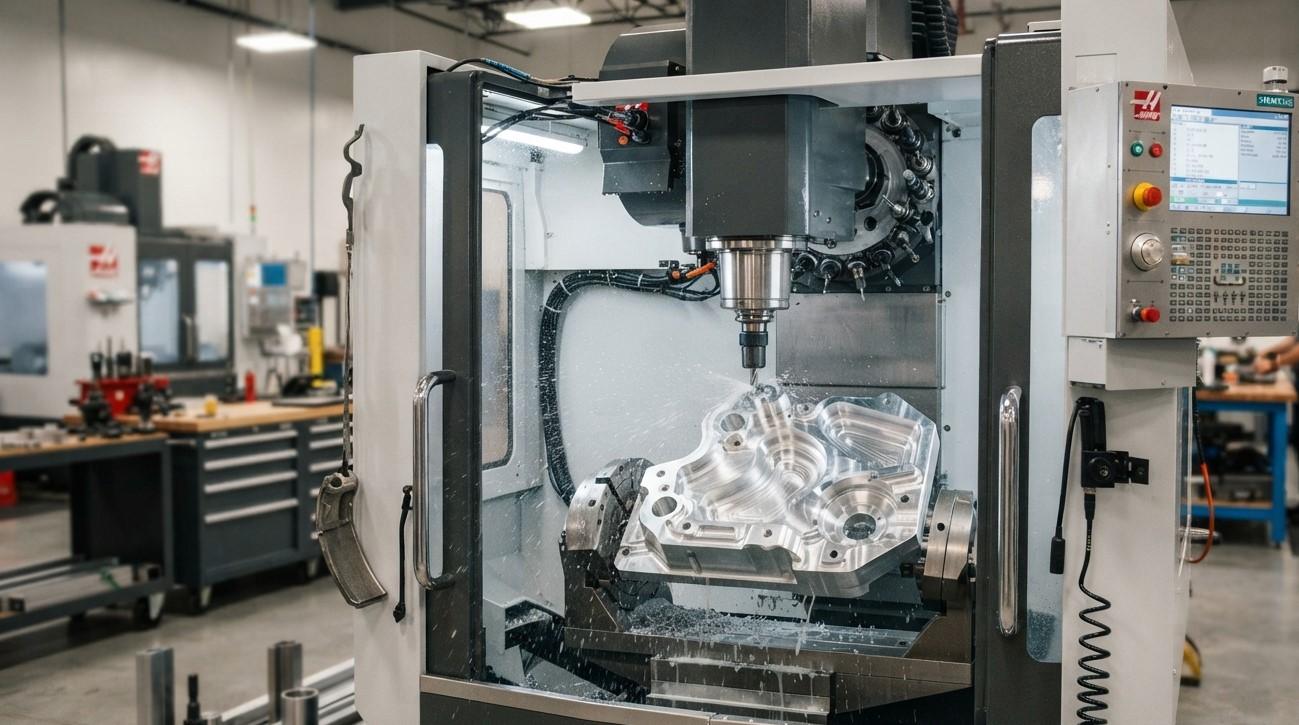
CNC milling is one of the most widely used machining processes for producing accurate components, complex profiles, slots, pockets, and precision surfaces. However, achieving consistent results depends on more than simply using a CNC milling machine. The selected milling strategy has a direct impact on cutting forces, tool life, machining time, surface finish, chip evacuation, and dimensional accuracy.
Modern manufacturing operations use different CNC milling strategies depending on the workpiece material, component geometry, cutting tool, machine capability, and production requirements. Choosing the appropriate strategy can help manufacturers improve productivity while maintaining the required level of precision.
As an experienced Industrial Tools Supplier in Dubai, Khokhawala Trading LLC provides industrial cutting tools, carbide cutting tools, CNC machining tools, precision measuring tools, and machining accessories for a wide range of engineering and manufacturing applications.
This guide explains the most common CNC milling strategies, their applications, advantages, and the key factors to consider when selecting the right approach for precision machining.
What Is a CNC Milling Strategy?
A CNC milling strategy refers to the planned movement of a cutting tool through a workpiece during a milling operation. It determines how the cutter approaches the material, how much material is removed in each pass, the direction of cutting, and how the tool moves between machining areas.
A suitable strategy should balance several factors, including:
-
Material removal rate
-
Cutting forces
-
Tool engagement
-
Tool life
-
Surface finish
-
Dimensional accuracy
-
Chip evacuation
-
Machine rigidity
-
Machining time
The same component may require multiple strategies. For example, roughing may use a high-material-removal strategy, followed by a finishing strategy designed to produce the required surface quality.
Why CNC Milling Strategy Selection Matters
Selecting the right milling strategy can significantly affect the overall machining process. An unsuitable toolpath can increase cutting forces, generate excessive heat, cause tool deflection, and shorten tool life.
A well-planned strategy can help:
-
Reduce machining time
-
Improve cutting tool life
-
Maintain dimensional accuracy
-
Reduce vibration and chatter
-
Improve surface finish
-
Control heat generation
-
Improve chip evacuation
-
Reduce unnecessary tool movements
-
Increase production consistency
The strategy should always be selected together with the appropriate CNC machining tools, tool geometry, workholding system, and cutting parameters.
1. Face Milling Strategy
Face milling is commonly used to create flat surfaces on the top of a workpiece. The cutting tool travels across the surface while the cutter removes material from the workpiece.
Face milling can be performed using indexable milling cutters, shell mills, or solid carbide tools depending on the application.
Applications
Face milling is commonly used for:
-
Creating flat reference surfaces
-
Removing excess material
-
Preparing surfaces for subsequent operations
-
Achieving specific surface finishes
-
Squaring workpiece faces
Key Considerations
Cutter diameter, insert geometry, axial depth of cut, radial engagement, spindle speed, and feed rate should be selected according to the material and machine capability.
A properly selected face milling cutter can improve material removal while maintaining surface quality.
2. Pocket Milling Strategy
Pocket milling removes material from enclosed or partially enclosed areas to create cavities or recesses.
The tool follows a programmed path inside the pocket, gradually removing material until the desired depth and shape are achieved.
Pocket milling strategies may include:
-
Contour-based passes
-
Zig-zag movements
-
Offset passes
-
Adaptive clearing
-
Trochoidal movements
The choice depends on pocket geometry, tool diameter, workpiece material, and required finish.
3. Contour Milling Strategy
Contour milling is used to machine the external or internal profile of a component. The cutting tool follows the programmed boundary of the part.
This strategy is particularly useful for producing:
-
Complex profiles
-
External walls
-
Internal boundaries
-
Curved components
-
Precision component outlines
For finishing applications, smaller stepovers and suitable cutting tools can help improve dimensional control and surface finish.
4. Adaptive Clearing
Adaptive clearing is a modern roughing strategy designed to maintain a more consistent tool engagement with the workpiece.
Instead of allowing the cutter to experience large changes in engagement, the toolpath is generated to maintain relatively controlled cutting conditions.
Benefits of Adaptive Clearing
Adaptive clearing can help:
-
Maintain more consistent cutting forces
-
Improve tool life
-
Increase material removal rates in suitable applications
-
Reduce sudden tool loading
-
Improve machining efficiency
It is particularly useful for removing large amounts of material from complex pockets and cavities.
The actual performance depends on machine capability, tooling, workholding, and programmed cutting conditions.
5. Trochoidal Milling
Trochoidal milling uses a combination of forward tool movement and circular or arc-like movements to control radial engagement.
It can be useful for slotting and machining difficult materials where maintaining a controlled cutter engagement is important.
Advantages
Trochoidal strategies can help:
-
Reduce radial cutting forces
-
Improve chip evacuation
-
Control heat
-
Allow deeper axial engagement in suitable conditions
-
Reduce tool loading
This approach is particularly useful when machining narrow slots or difficult-to-machine materials.
6. Slot Milling
Slot milling creates narrow channels, grooves, or slots in a workpiece. It can be performed using end mills, slot drills, or specialized milling cutters.
Full-width slotting can generate substantial radial engagement and cutting forces, so tool diameter, flute geometry, machine rigidity, and chip evacuation become important.
For deep slots, appropriate toolpath strategies may be used to control heat and prevent chips from accumulating around the cutter.
7. Ramp Milling
Ramp milling involves gradually moving the cutting tool downward while simultaneously moving it horizontally.
Rather than entering the workpiece vertically, the tool approaches the material at a controlled angle.
Ramp milling can be useful for:
-
Pocket entry
-
Creating sloped surfaces
-
Reducing direct axial loading
-
Machining certain cavities
-
Tool entry into difficult areas
The ramp angle should be compatible with the tool manufacturer's recommendations.
8. Helical Milling
Helical milling uses circular movement combined with gradual axial movement. The tool travels along a helical path as it enters or enlarges a feature.
This strategy is commonly used for:
-
Circular holes
-
Bore preparation
-
Pocket entry
-
Internal features
-
Interpolation operations
Helical interpolation can provide an alternative to conventional drilling in certain applications, particularly when hole size or geometry requires additional control.
9. High-Speed Milling Strategy
High-speed milling involves machining at elevated spindle speeds and, depending on the application, relatively controlled cutting engagement.
It requires careful coordination between:
-
Cutting tool design
-
Tool material
-
Tool coating
-
Tool holder
-
Spindle capability
-
Workholding
-
Cutting parameters
-
Toolpath strategy
High-speed machining can improve productivity and surface finish in suitable applications, but excessive speed without proper tooling and machine capability can accelerate tool wear or create thermal problems.
10. Roughing and Finishing Strategies
Most precision CNC milling operations use separate roughing and finishing stages.
Roughing
The primary objective of roughing is to remove material efficiently while leaving an appropriate amount of stock for finishing.
Roughing strategies often focus on:
-
High material removal
-
Controlled cutting forces
-
Efficient chip evacuation
-
Tool life
-
Stable machining
Finishing
Finishing focuses on achieving the required dimensions and surface quality.
Finishing strategies may use:
-
Smaller stepovers
-
Lower radial engagement
-
Ball nose or corner-radius cutters
-
Contouring
-
Parallel passes
-
Scallop-controlled toolpaths
The final strategy depends on the geometry and required surface specification.
11. 3D Surface Milling
3D surface milling is used to produce complex curved or sculpted surfaces.
Common applications include:
-
Dies and molds
-
Aerospace components
-
Automotive components
-
Medical components
-
Complex engineering parts
Ball nose end mills are frequently used for 3D finishing because their rounded cutting edge can follow curved surfaces.
Toolpath options may include parallel passes, constant scallop strategies, contour passes, and other CAM-generated movements.
How Tool Selection Affects CNC Milling Strategies
The milling strategy and cutting tool should be selected together. Different strategies may require different tool designs.
Important factors include:
Tool Material
Carbide cutting tools are widely used for CNC machining because of their hardness and wear resistance. HSS tools can also be suitable for certain applications.
Tool Diameter
Larger tools can provide greater rigidity and material removal capability, while smaller tools are necessary for detailed features and narrow areas.
Number of Flutes
Flute count affects chip space, feed capability, and cutting behavior. Aluminum machining, for example, may require different flute configurations from hardened steel machining.
Tool Geometry
Rake angle, helix angle, clearance angle, corner radius, and edge preparation influence cutting forces and chip formation.
The Role of CNC Tool Holders
A good milling strategy can still produce poor results if the tool is not held securely.
CNC tool holders should provide adequate rigidity and accurate tool positioning. Excessive runout can cause uneven tool loading, premature wear, poor surface finish, and dimensional variation.
Tool overhang should also be minimized where practical because longer tool extensions increase deflection.
Machining accessories such as collet chucks, milling chucks, hydraulic holders, and other workholding or toolholding systems should be selected according to the machine and application.
Cutting Parameters and Milling Strategy
Toolpath strategy must be combined with appropriate cutting parameters.
Important parameters include:
-
Cutting speed
-
Spindle speed
-
Feed rate
-
Feed per tooth
-
Axial depth of cut
-
Radial depth of cut
-
Stepover
-
Tool engagement
For spindle speed, a commonly used relationship is:
N = (1000 × Vc) / (π × D)
Where:
-
N = spindle speed in revolutions per minute
-
Vc = cutting speed in metres per minute
-
D = tool diameter in millimetres
Actual values should be determined using the tool manufacturer's recommendations and the specific machine and workpiece conditions.
How Workholding Influences Milling Strategy
Workholding is another critical factor. A securely supported workpiece reduces movement and vibration during machining.
Depending on the component, manufacturers may use:
-
CNC vises
-
Chucks
-
Collet systems
-
Hydraulic workholding
-
Pneumatic fixtures
-
Modular fixtures
-
Custom fixtures
-
Soft jaws
The workholding method should provide sufficient access to the machining area while maintaining rigidity.
Using Precision Measuring Tools for Quality Control
Precision machining requires reliable inspection throughout the manufacturing process.
Precision measuring tools such as digital calipers, micrometers, dial indicators, bore gauges, and height gauges can be used to verify dimensions and identify machining variation.
Measurement can help determine whether a selected milling strategy is producing consistent results and whether tool wear or machine-related issues are affecting the component.
Common CNC Milling Strategy Mistakes
Some common mistakes include:
-
Using the same toolpath strategy for every material
-
Selecting tools without considering workpiece geometry
-
Excessive tool overhang
-
Incorrect cutting parameters
-
Ignoring tool runout
-
Poor chip evacuation
-
Using an unsuitable tool diameter
-
Removing too much material during finishing
-
Failing to account for machine rigidity
-
Ignoring workholding limitations
-
Continuing to use worn cutting tools
These problems can increase machining time, scrap rates, and tooling costs.
Best Practices for Precision CNC Milling
For reliable CNC milling performance:
-
Select the strategy according to the workpiece geometry.
-
Match cutting tools to the material and operation.
-
Use suitable carbide cutting tools for demanding applications where appropriate.
-
Minimize tool overhang.
-
Check tool runout before machining.
-
Use stable CNC tool holders.
-
Maintain appropriate cutting speeds and feeds.
-
Plan roughing and finishing separately when necessary.
-
Ensure effective chip evacuation.
-
Use appropriate coolant or lubrication when required.
-
Maintain rigid and secure workholding.
-
Inspect finished components using precision measuring tools.
-
Monitor tool wear and replace tools at appropriate limits.
-
Use CAM simulation to identify potential toolpath problems before production.
Conclusion
Understanding different CNC milling strategies is essential for achieving precision, productivity, and consistent machining performance. Face milling, pocket milling, contouring, adaptive clearing, trochoidal milling, slotting, ramping, helical milling, high-speed machining, and 3D surface milling each have specific applications and advantages.
The best strategy depends on the workpiece material, component geometry, machine capability, cutting tool, tool holder, workholding system, and required surface finish. A successful CNC machining process therefore requires more than selecting a toolpath; every part of the machining system must work together.
For manufacturers looking for reliable industrial cutting tools, carbide cutting tools, CNC machining tools, CNC tool holders, precision measuring tools, and machining accessories, Khokhawala Trading LLC provides industrial tooling solutions for a wide range of engineering applications.
As an experienced Industrial Tools Supplier in Dubai, Khokhawala Trading LLC can support workshops in selecting suitable tooling solutions for different CNC machining requirements. By combining the right milling strategy with appropriate tooling, cutting parameters, workholding, and measurement practices, manufacturers can achieve more reliable machining performance and maintain the accuracy expected from modern CNC production.

 Arabic
 French
 Spanish
 Portuguese
 Deutsch
 Turkish
 Dutch
Dutch
 Italiano
 Russian
 Romaian
 Portuguese (Brazil)
 Greek
Greek