


What Information Should an Author Provide to a Book Cover Designer?
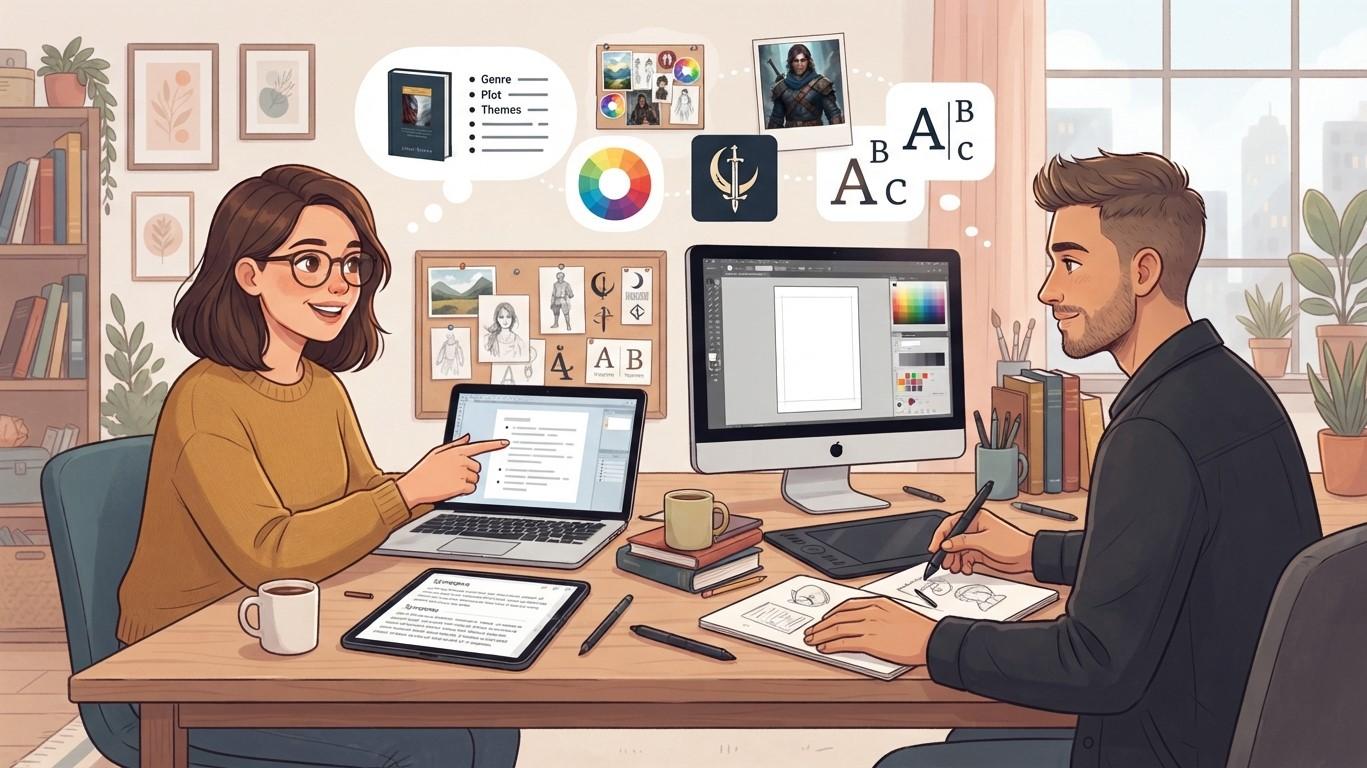
Creating an effective Book cover design starts with clear communication between the author and designer. A designer can create a more suitable cover when they understand the book's genre, subject, target readers, tone, title, and publishing requirements. Providing the right information at the beginning can make the design process more organized and reduce unnecessary revisions.
For authors preparing their books for Book Publishing, the cover is an important part of the overall presentation. Professional services such as Potter Publishers can help authors with cover design while also supporting other stages of the publishing process.
Table of Contents
- Why Should Authors Provide Information to Designers?
- Book Title and Subtitle
- Author Name and Series Information
- Book Genre and Category
- Target Audience
- Book Summary or Description
- Desired Tone and Mood
- Visual Ideas and Preferences
- Color Preferences
- Design References
- Publishing Format and Size
- Technical Requirements
- Important Cover Text
- What Authors Should Avoid
- How Potter Publishers Can Help
- FAQs
- Final Thoughts
- CTA
1. Why Should Authors Provide Information to Designers?
A book cover designer needs to understand the book before creating its visual concept.
Simply providing the manuscript may not be enough because a designer needs to know what the author wants the cover to communicate.
Useful information can help the designer understand:
- What the book is about
- Who will read it
- What genre it belongs to
- What mood it should communicate
- Which visual elements may be appropriate
- Where the book will be published
- Which formats are required
Clear communication at the beginning can make the Book cover design process more efficient and focused.
2. Book Title and Subtitle
The first information a designer needs is the exact book title.
Provide the title exactly as it should appear on the final cover. If the book has a subtitle, provide that as well.
Authors should double-check:
- Spelling
- Capitalization
- Punctuation
- Subtitle wording
- Series information
Small errors can become more complicated to correct once the cover has been finalized.
3. Author Name and Series Information
The designer also needs the exact author name that should appear on the cover.
If the book belongs to a series, provide the relevant information, such as:
- Series name
- Book number
- Series branding
- Other required text
A series may benefit from a consistent visual identity across multiple covers, so it is useful to tell the designer about future books if applicable.
4. Book Genre and Category
Genre is one of the most important pieces of information for a cover designer.
Tell the designer whether the book is:
- Romance
- Mystery
- Thriller
- Fantasy
- Science fiction
- Historical fiction
- Biography
- Memoir
- Business
- Self-help
- Children's literature
- Cookbook
- Educational
- Another specific category
The genre helps determine appropriate typography, imagery, colors, composition, and overall visual direction.
A cover for a children's story, for example, may require a very different approach from a professional business guide.
5. Target Audience
The designer should understand who the book is intended for.
Provide information about the target readership, such as:
- Age range
- General interests
- Professional background, when relevant
- Reading preferences
- Expected audience for the subject
The more clearly the audience is defined, the easier it can be to develop a visual concept that fits the book.
6. Book Summary or Description
Authors should provide a short summary of the book.
For fiction, this might include:
- Main characters
- Setting
- Central conflict
- Story atmosphere
- Major themes
For nonfiction, provide:
- Main topic
- Key ideas
- Reader benefits
- Subject area
- Purpose of the book
The designer does not necessarily need every detail of the manuscript. A concise explanation can often provide enough context to understand the book's visual direction.
7. Desired Tone and Mood
Tell the designer how you want the cover to feel.
Possible descriptions include:
- Mysterious
- Inspirational
- Serious
- Professional
- Playful
- Dramatic
- Elegant
- Adventurous
- Warm
- Modern
- Minimalist
These descriptions can help the designer translate the book's content into a visual style.
For example, an author writing an inspirational nonfiction book might want the cover to feel positive and accessible, while a thriller author may want a more suspenseful atmosphere.
8. Visual Ideas and Preferences
Authors often have ideas about what they would like to see on their covers.
You can provide suggestions about:
- Main imagery
- Characters
- Locations
- Objects
- Symbols
- Illustrations
- Photography
- Typography
- Layout
These ideas can serve as a starting point for the designer.
However, it is also useful to allow the designer some creative flexibility. A professional designer may suggest an alternative concept that communicates the book more effectively.
9. Color Preferences
If you have specific color preferences, tell the designer.
You might already have:
- A preferred color palette
- Existing author branding
- Series colors
- Colors associated with the subject
- Colors you want to avoid
However, color choices should also work with the book's genre and typography.
The designer can help determine how the colors should be combined while maintaining readability and visual balance.
10. Design References
Visual references can make communication easier.
Authors can show examples of covers they like and explain what they like about them.
For example:
"I like the large title."
Or:
"I like the minimalist layout and simple typography."
The purpose of references should be to communicate preferences rather than copy another author's cover.
A designer can use those preferences as inspiration while creating an original design for the author's book.
11. Publishing Format and Size
The designer needs to know how the book will be published.
Tell them whether you need:
- Ebook cover
- Paperback cover
- Hardcover cover
- Multiple formats
A print cover may require a front cover, spine, and back cover, while an ebook generally uses a front cover.
For print editions, details such as trim size and page count can affect the dimensions of the final cover file.
Providing this information early can help prevent unnecessary redesign work later.
12. Technical Requirements
Different publishing platforms can have specific technical requirements.
Depending on the project, designers may need information about:
- File dimensions
- Resolution
- File format
- Color settings
- Bleed
- Spine width
- Barcode placement
Professional Book Publishing services can help coordinate these requirements as part of the publishing workflow.
Authors should provide any technical specifications they already have rather than assuming that the same file will work for every format.
13. Important Cover Text
Authors should provide all text that needs to appear on the cover.
This might include:
- Title
- Subtitle
- Author name
- Series title
- Edition information
- Endorsements or short quotes, where appropriate
- Other required information
Every piece of text should be checked carefully before the final design is approved.
This is particularly important because correcting text after final files have been prepared can require additional design work.
14. What Authors Should Avoid
Good communication is important, but authors should also avoid overwhelming the designer with unnecessary requirements.
Don't Provide Too Many Conflicting Ideas
Giving ten completely different design directions can make it difficult to establish one clear concept.
Don't Insist on Copying Another Cover
Reference covers can communicate preferences, but the final design should be original.
Don't Hide Important Information
If the book has unusual formatting, a special audience, or important series requirements, tell the designer early.
Don't Make Last-Minute Changes Without Considering Their Impact
Changing the title, subtitle, format, or major concept late in the process can require substantial revisions.
15. How Potter Publishers Can Help
Potter Publishers provides publishing services for independent authors, including professional Book cover design. Its current publishing services include cover design alongside editing, formatting, ISBN registration, retailer setup, and distribution.
When working on a cover, authors can provide information about their genre, audience, manuscript, visual preferences, publishing format, and desired tone. This gives the design team useful context for developing a cover concept.
Potter Publishers also states that its authors can select individual services according to their needs rather than being required to choose fixed package tiers.
For an author preparing a first book, clearly explaining the project at the beginning can help make the publishing and design process easier to manage.
FAQs
What information does a book cover designer need?
A designer generally needs the book title, author name, genre, target audience, summary, desired tone, visual preferences, publishing format, and any required cover text.
Should I give my entire manuscript to the designer?
You should follow the designer's preferred process. A manuscript or detailed summary can provide useful context, but the amount of material needed can vary depending on the project.
Should I provide examples of other book covers?
Yes. Examples can help communicate your preferred style, typography, colors, or layout. However, the final design should be original rather than copying another book.
Do I need to tell the designer my book's genre?
Yes. Genre is an important factor in professional Book cover design because readers often have different visual expectations for different types of books.
Does the designer need to know whether my book is an ebook or paperback?
Yes. Different formats can have different technical requirements, so the designer should know which editions you plan to publish.
Can Potter Publishers help with Book cover design?
Yes. Potter Publishers lists professional Book cover design among its publishing-related services.
Final Thoughts
Providing the right information to a cover designer can make the Book cover design process more efficient and productive. Authors should clearly communicate the title, genre, target audience, book summary, desired tone, visual preferences, colors, publishing formats, and technical requirements.
For authors going through Book Publishing, good communication can help ensure that the cover works alongside the book's content and overall presentation. Potter Publishers offers professional publishing services, including Book cover design, to support independent authors as they prepare their books for publication.
Ready to Create Your Book Cover?
Have a manuscript ready for publication? Share your book's genre, audience, story or subject, and design preferences with Potter Publishers to explore professional Book cover design and other publishing services for your project.

 English
 Arabic
 French
 Spanish
 Portuguese
 Turkish
 Dutch
Dutch
 Italiano
 Russian
 Romaian
 Portuguese (Brazil)
 Greek
Greek